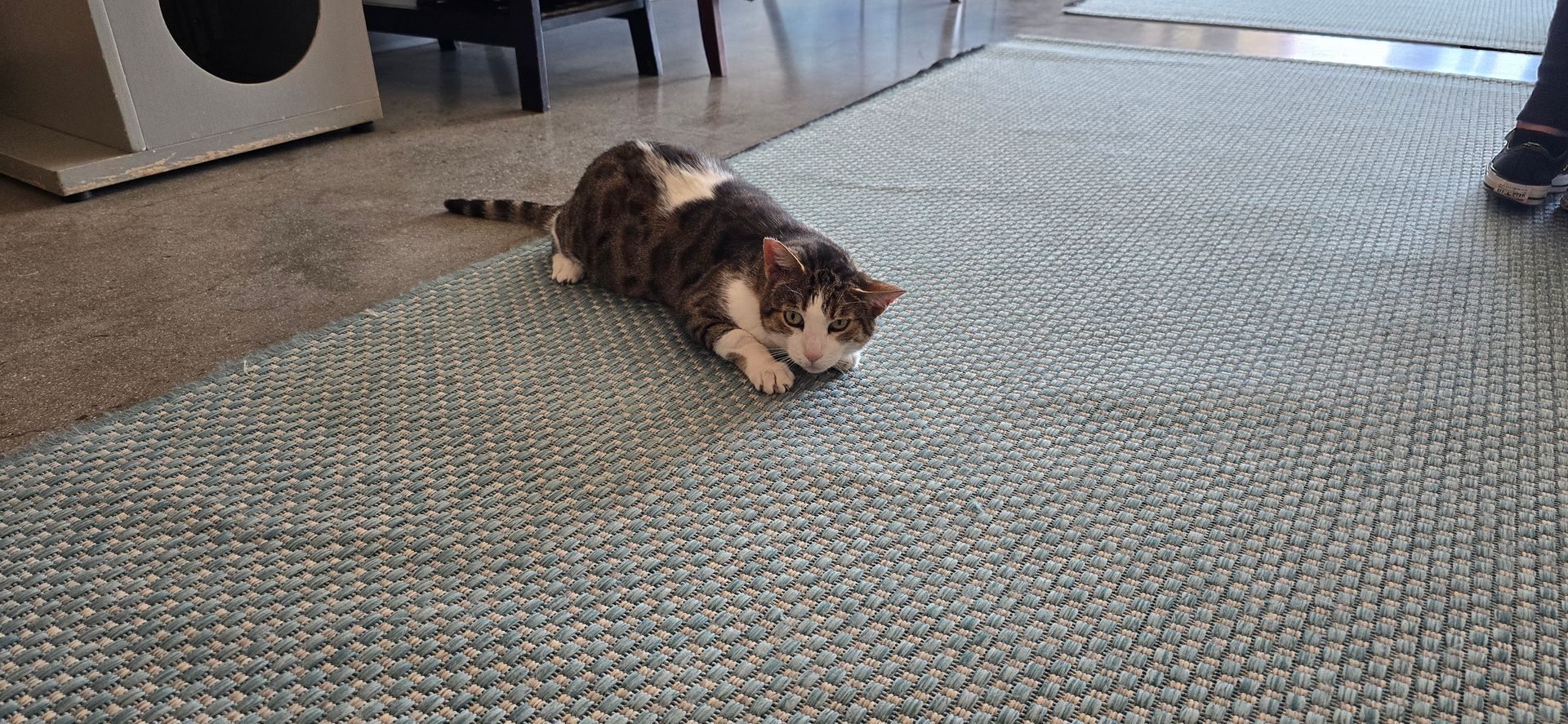
"What Does It Mean When a Cat…?" We Explain Common Cat Behaviors
Cats don’t use words—but they’re constantly communicating. If you’ve ever caught yourself wondering, “What does it mean when my cat does that?” you’re in good company. From playful quirks to confusing habits, cat behavior can feel like a puzzle.
After years of caring cats at Cat & Craft Cat Cafe, one thing has become clear: every cat has a unique personality, but many behaviors follow familiar patterns. Once you understand those patterns, caring for cats begins to make a lot more sense.
Let’s break down some of the most common cat questions—and what those behaviors usually mean.
1. What Does It Mean When a Cat Meows at You?
Cats rarely meow to each other—this is a behavior they’ve developed specifically for humans.
If your cat is meowing, they’re likely trying to:
- Get your attention
- Ask for food or water
- Greet you
- Express boredom or frustration
The tone matters. Short, soft meows tend to be friendly, while louder or repeated meows usually signal a stronger need. If your cat suddenly becomes much more vocal than usual, it’s worth paying attention—changes in communication can sometimes point to stress or discomfort.
2. What Does It Mean When a Cat Meows at You?
Cats rarely meow to each other—this is a behavior they’ve developed specifically for humans.
If your cat is meowing, they’re likely trying to:
- Get your attention
- Ask for food or water
- Greet you
- Express boredom or frustration
The tone matters. Short, soft meows tend to be friendly, while louder or repeated meows usually signal a stronger need. If your cat suddenly becomes much more vocal than usual, it’s worth paying attention—changes in communication can sometimes point to stress or discomfort.
3. What Does It Mean When a Cat Meows at You?
Cats rarely meow to each other—this is a behavior they’ve developed specifically for humans.
If your cat is meowing, they’re likely trying to:
- Get your attention
- Ask for food or water
- Greet you
- Express boredom or frustration
The tone matters. Short, soft meows tend to be friendly, while louder or repeated meows usually signal a stronger need. If your cat suddenly becomes much more vocal than usual, it’s worth paying attention—changes in communication can sometimes point to stress or discomfort.
4. What Does It Mean When a Cat Purrs?
Purring is often associated with happiness—and most of the time, that’s exactly what it means.
Your cat is likely feeling:
- Relaxed
- Safe
- Content
However, cats can also purr when they’re anxious or even in pain. It’s a self-soothing mechanism. Context is everything: a relaxed, cuddly cat is very different from a withdrawn or hiding one that’s also purring.
5. What Does It Mean When a Cat Kneads?
Also known as “making biscuits,” kneading is when a cat rhythmically presses their paws into a soft surface.
This behavior usually means:
- They feel safe and comfortable
- They’re settling in to rest
- They’re showing affection
It’s a leftover instinct from kittenhood, when kneading helped stimulate milk flow from their mother. In adult cats, it’s one of the clearest signs they’re content.
6. What Does It Mean When a Cat Stares at You?
That intense stare can feel a little unsettling—but it’s usually harmless.
Your cat may be:
- Curious about what you’re doing
- Waiting for food or attention
- Showing affection
If your cat slow-blinks while looking at you, that’s actually a sign of trust. You can even try slow-blinking back—it’s one of the simplest ways to bond.
7. What Does It Mean When a Cat Gets the “Zoomies”?
Sudden bursts of energy—running, jumping, sprinting across the house—are completely normal.
These “zoomies” happen because:
- Cats have pent-up energy
- They’re following natural hunting instincts
- They’re most active during dawn and dusk
Regular interactive play can help manage this energy, especially for indoor cats.
8. What Does It Mean When a Cat Hides?
Hiding is a natural behavior for cats. It helps them feel safe and in control of their environment.
Common reasons include:
- Stress or overstimulation
- Adjusting to new surroundings
- Wanting quiet time
That said, if a social cat suddenly starts hiding frequently, it could signal something more serious, like illness or anxiety.
9. What Does It Mean When a Cat Brings You “Gifts”?
Whether it’s a toy or something a little less welcome, this behavior is actually a compliment.
Your cat may be:
- Sharing their “hunt” with you
- Including you in their social group
- Trying to engage you in play
It’s rooted in instinct—but it also shows trust.
Why Understanding Behavior Matters
Every cat is different, but behavior is their primary language. The more you observe patterns—tone, timing, body language—the easier it becomes to understand what they need.
Spending time around a variety of cats, like visitors do at Cat & Craft, highlights just how diverse feline personalities can be. Some are vocal and outgoing, others quiet and observant—but all of them are communicating in their own way.
Final Thoughts
Cats may not speak, but they’re far from silent. Every meow, purr, stare, or sprint across the room has meaning behind it.
Understanding those signals doesn’t just solve a mystery—it builds a stronger connection. And whether you’re a lifelong cat owner or just getting to know them, that connection is what makes time with cats so rewarding.